3–4 sets × 15–20 reps (30–50% 1RM, RPE 5–7)
3–4 sets × 12–15 reps (50–70% 1RM, RPE 6–7)
2–3 sets × 20–25 reps (20–40% 1RM, RPE 5–6)
Wrists only movement
Curl as high as possible
Arms stay still
Squeeze forearms at top
Control descent
Full range of motion
Moving elbows or upper arms
Not achieving full range
Using momentum
Going too fast
Using too much weight
Not squeezing at top
Using momentum
Going too fast
Using too much weight
Not squeezing at top
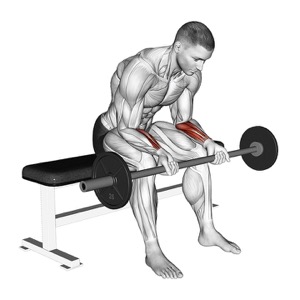
The seated barbell wrist curl is an isolation exercise that targets the forearm flexors. The seated position provides stability and allows for strict form, making it excellent for building forearm mass and grip strength.
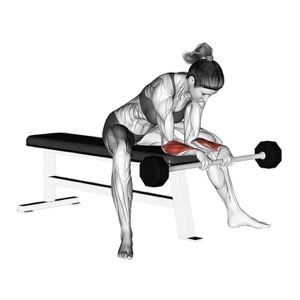
The reverse grip barbell wrist curl is an isolation exercise that targets the forearm extensors. This exercise is excellent for building forearm mass, grip strength, and preventing muscle imbalances.
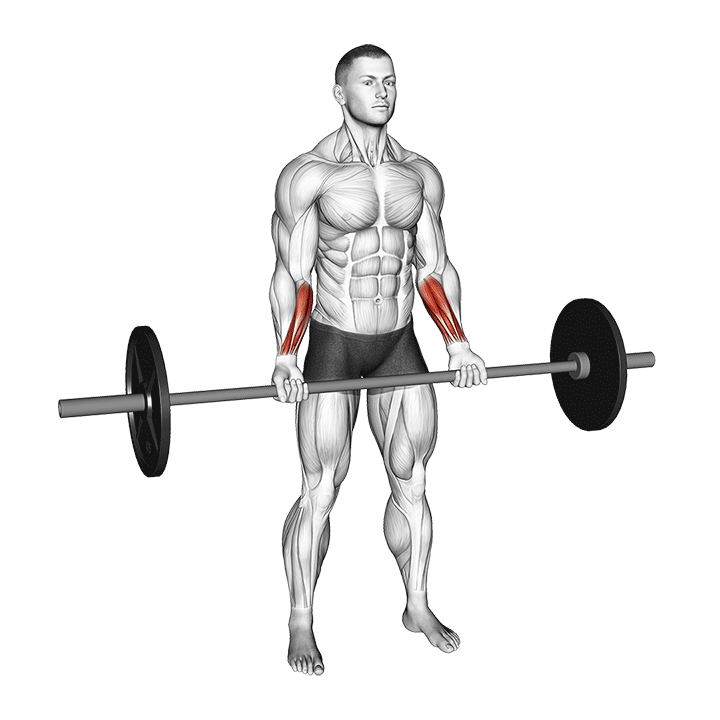
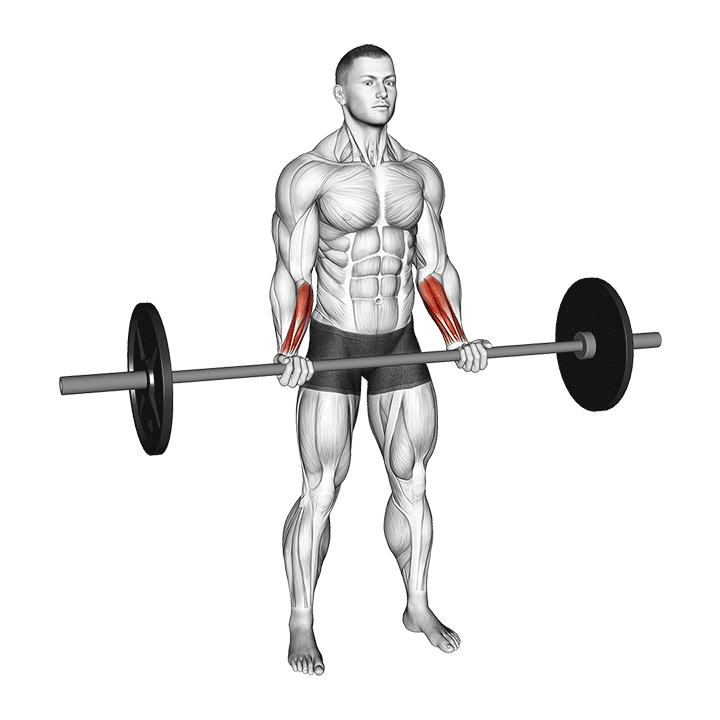
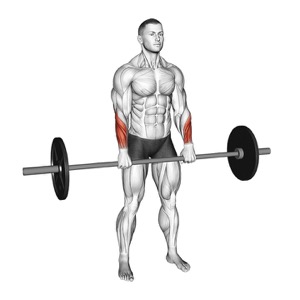
The standing reverse grip barbell wrist curl is an isolation exercise that targets the forearm extensors. This movement balances forearm development and is excellent for building complete forearm strength.